
Elite White Pilates Reformer | Durable & Versatile Home Studio
The Advanced Engineering of the White Pilates Reformer for Commercial Applications
In the rapidly evolving landscape of high-performance fitness equipment, the white pilates reformer stands out as a pinnacle of design, functionality, and durability. Engineered for demanding commercial environments, these reformers combine aesthetic appeal with robust technical specifications, making them a preferred choice for professional studios, rehabilitation centers, and upscale wellness facilities globally. This comprehensive guide delves into the intricate details of their manufacturing, technical advantages, application versatility, and the strategic considerations for B2B procurement.
The demand for premium Pilates equipment has surged, driven by increased awareness of core strength, flexibility, and therapeutic exercise. Industry reports indicate a significant growth trajectory in the global fitness equipment market, with Pilates apparatus segment being a key contributor. This growth is fueling innovation in materials and design, positioning aluminum alloy reformers as a leading solution for businesses prioritizing longevity, performance, and client satisfaction.
Manufacturing Process & Material Science: Precision in Every Component
The production of a high-quality white pilates reformer is a multi-stage, precision-intensive process, emphasizing material integrity and advanced manufacturing techniques. The choice of aluminum alloy, specifically aircraft-grade 6061 or 7075 series, is critical for achieving an optimal balance of strength, lightweight properties, and corrosion resistance.
Key Materials & Their Role:
- Frame (Aluminum Alloy): Lightweight, high strength-to-weight ratio, excellent corrosion resistance, and amenable to anodizing or powder coating for the signature white finish. This ensures a long service life, even in humid studio environments.
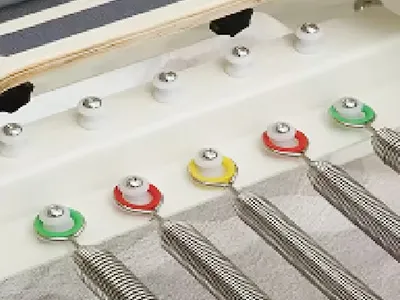
- Springs (High-Tensile Steel): Custom-designed for specific resistance levels (e.g., light, medium, heavy, very heavy), often made from music wire or chrome silicon for consistent tension and durability over hundreds of thousands of cycles.
- Upholstery (Medical-Grade Vinyl/PU Leather): Abrasion-resistant, easy to clean, antibacterial properties, and high-density foam for comfort and support.
- Carriage Wheels (Precision Bearings, Nylon/Polyurethane): Engineered for silent, ultra-smooth gliding, critical for the fluid movements of advanced pilates moves reformer exercises.
- Ropes and Straps (Braided Nylon/Dyneema): High tensile strength, low stretch, and UV resistance for consistent performance.
Manufacturing Process Flow:
The manufacturing sequence ensures structural integrity and precision:
- Material Sourcing & Inspection: Raw aluminum alloy sheets/extrusions are rigorously inspected to meet ASTM B209 (for sheets) or B221 (for extrusions) standards, ensuring material composition and purity.
- CNC Machining & Forging: Frame components are precisely cut and shaped using Computer Numerical Control (CNC) machines, ensuring tight tolerances. Complex components, such as foot bars or pulley housings, might undergo forging for superior grain structure and strength.
- Welding & Assembly of Frame: TIG (Tungsten Inert Gas) welding is often employed for its clean, strong, and precise welds on aluminum, followed by thorough inspection for structural integrity.
- Surface Treatment (Powder Coating/Anodizing): The frame undergoes pre-treatment (cleaning, phosphating) before electrostatic powder coating or anodizing. The pristine white finish is achieved with high-durability epoxy-polyester powder, cured at high temperatures for chip and scratch resistance.
- Component Manufacturing: Springs are coiled and heat-treated to exact specifications. Upholstery is cut, stitched, and filled with high-resilience foam. Precision bearings are integrated into wheels.
- Final Assembly: All sub-components are meticulously assembled, including the carriage, spring mechanism, ropes, pulleys, footbar, and headrest.
- Quality Control & Testing: Each reformer undergoes stringent functional testing, including carriage glide smoothness, spring tension accuracy (calibrated to within +/- 2% of stated resistance), foot bar stability under dynamic load, and overall structural integrity. Products typically conform to ISO 20957-1 (Stationary training equipment – General safety requirements and test methods) and EN 957-1 standards.
The typical service life for a commercial-grade white pilates reformer is 10-15 years with proper maintenance, significantly outperforming lower-cost alternatives. Target industries include high-volume Pilates studios, physical therapy clinics, athletic training facilities, and corporate wellness programs. In these scenarios, the advantages are clear: energy saving through efficient movement mechanics, superior corrosion resistance of the aluminum frame, and reduced maintenance downtime, leading to a lower total cost of ownership.
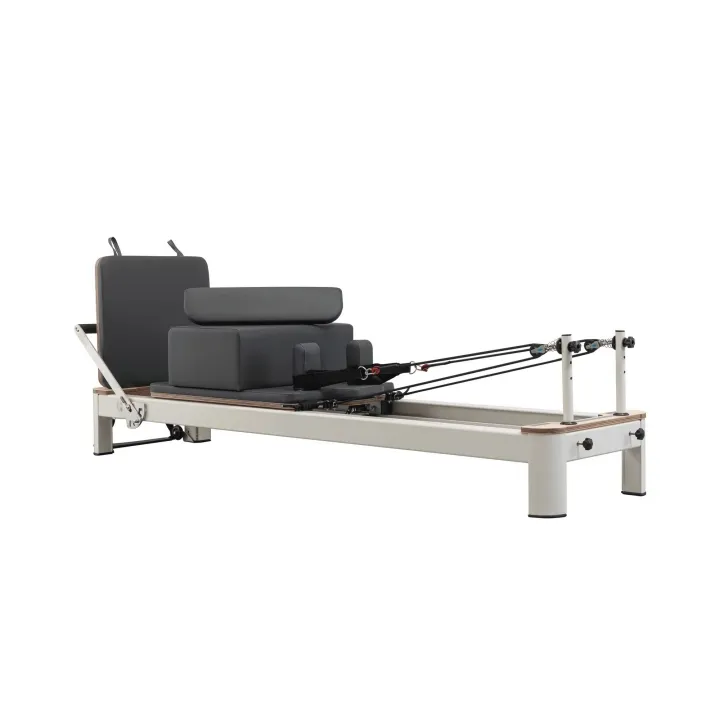
Precision-engineered frame of a white pilates reformer.
Technical Specifications and Performance Parameters
Understanding the technical parameters of the white pilates reformer is crucial for B2B decision-makers. These specifications directly impact performance, durability, and user experience.
Product Specification Table: Full Slide Track Small White Reformer Aluminum Alloy Pilates Reformer
These specifications ensure that the reformer can facilitate a full range of exercises, from beginner routines to advanced pilates moves reformer protocols, accommodating diverse body types and fitness levels. The full slide track design is particularly beneficial for maximizing range of motion and enhancing the effectiveness of each movement.
Application Scenarios and Industry Integration
The versatility and robust construction of the white pilates reformer make it indispensable across various professional and therapeutic settings. Its aesthetic appeal also seamlessly integrates into modern design schemes.
- High-End Pilates Studios: The primary application. Studios require equipment that can withstand high-frequency use, offer precise adjustments for varied clientele, and maintain a pristine appearance. The white finish contributes to a clean, spacious, and sophisticated studio ambiance, which is critical for client retention and brand image.
- Physical Therapy & Rehabilitation Centers: The smooth, controlled resistance and wide range of motion provided by the reformer are ideal for post-injury recovery, strengthening, and improving proprioception. The adjustability allows therapists to tailor exercises to individual patient needs, making it a cornerstone for therapeutic interventions.
- Corporate Wellness Programs: Progressive companies are investing in on-site wellness facilities. A commercial-grade reformer offers employees access to a highly effective, low-impact exercise method, contributing to reduced stress, improved physical health, and increased productivity.
- Luxury Residential Gyms: For discerning homeowners, integrating professional-grade equipment like a white pilates reformer ensures a premium fitness experience matching the exclusivity of their residences. It represents an investment in health and home value.
- Professional Athletic Training Centers: Athletes use reformers for cross-training, injury prevention, and enhancing core stability, crucial for performance in sports. The reformer, alongside a pilates chair or Cadillac, forms a comprehensive training suite.
Each scenario benefits from the reformer's precision engineering, ensuring safety and efficacy for a broad spectrum of users. For instance, in rehabilitation, the nuanced spring resistance allows for gentle, progressive loading, while in athletic training, it facilitates dynamic, strength-building movements.
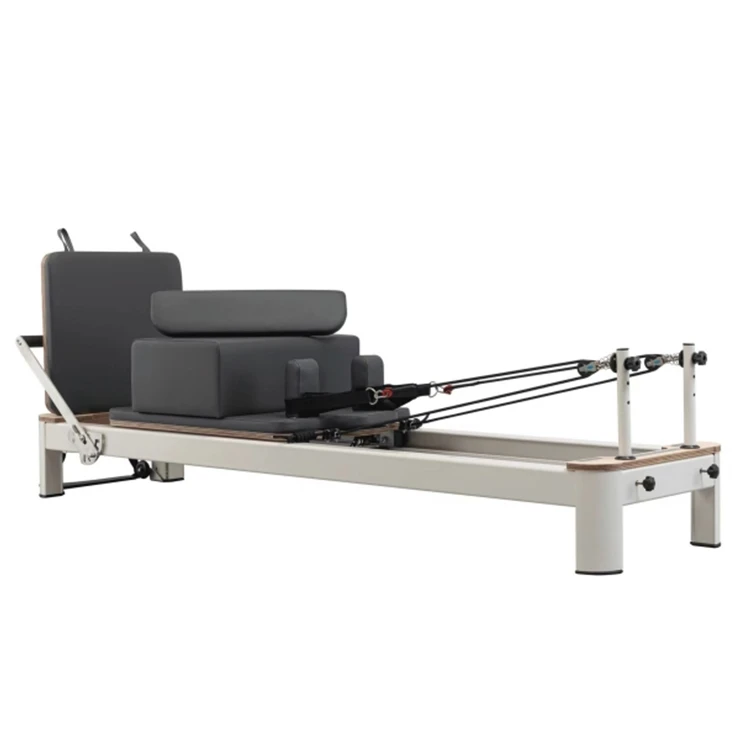
A white pilates reformer in a modern studio setting.
Technical Advantages & Competitive Edge
The Full Slide Track Small White Reformer Aluminum Alloy Pilates Reformer offers distinct technical advantages that establish its competitive edge in the market.
- Superior Durability & Longevity: The aluminum alloy frame, unlike traditional wood frames or lower-grade steel, resists warping, cracking, and rust. This makes it ideal for humid environments and ensures a longer operational lifespan under continuous commercial use.
- Precision & Smoothness: The full slide track system, combined with an 8-wheel carriage and precision bearings, guarantees an ultra-smooth, silent glide. This precision is critical for executing advanced pilates moves reformer exercises without jarring or instability, protecting joints and enhancing workout quality.
- Enhanced Ergonomics & Adjustability: Multi-position footbars, gearbars, headrests, and adjustable ropes allow for fine-tuning to individual body mechanics and exercise variations. This adaptability improves user comfort and exercise efficacy across a diverse client base.
- Aesthetic Appeal & Maintenance: The sleek white powder-coated or anodized finish is not only visually appealing, contributing to a premium studio image, but also highly resistant to scratches and chips. It's easy to clean and sanitize, crucial for high-traffic commercial settings.
- Lightweight Design (Relative): While robust, the aluminum frame is significantly lighter than comparable steel models, facilitating easier studio reconfigurations or transport if required, without compromising stability. This contrasts with heavier, less portable solutions like certain aero pilates reformer models that may prioritize home use.
- Consistent Resistance Calibration: High-tensile steel springs are meticulously calibrated to deliver consistent and predictable resistance, which is vital for progressive training and safe execution of complex movements.
Vendor Comparison and Strategic Sourcing
Selecting the right vendor for a white pilates reformer is a strategic decision that impacts operational efficiency, client satisfaction, and long-term profitability. Beyond initial purchase price, factors like manufacturing quality, warranty, and customer support are paramount.
Key Factors for Vendor Evaluation:
- Certifications: Look for ISO 9001 for quality management, ISO 20957-1 for fitness equipment safety, and material certifications.
- Material Specifications: Verify the grade of aluminum alloy, spring type, and upholstery quality.
- Manufacturing Precision: Inquire about CNC machining, welding processes, and quality control checkpoints.
- Warranty & After-Sales Support: A robust warranty on frame and components signifies manufacturer confidence.
- Customization Options: The ability to customize spring packages, upholstery colors, or frame accents.
- Lead Times & Logistics: Especially for large orders, reliable fulfillment is critical.
Product Comparison: Aluminum Alloy Reformer vs. Standard Steel Reformer
This comparison highlights that while steel reformers offer a cost-effective entry, the long-term value, superior performance, and reduced maintenance of an aluminum alloy white pilates reformer typically justify the higher initial investment for commercial operations.

Detail of the precision carriage system of a white pilates reformer.
Customized Solutions and Scalability
Recognizing the diverse needs of commercial clients, reputable manufacturers offer customized solutions for their white pilates reformer lines.
- Upholstery Customization: Options for specific colors, antimicrobial treatments, or even custom branding elements embossed into the vinyl to match studio aesthetics.
- Spring Configuration: While standard reformers come with a specific spring set, clients can often request alternative spring tensions or quantities to cater to specialized training methodologies or client populations (e.g., more heavy springs for athletic training, more light springs for rehabilitation).
- Accessory Integration: Custom bundles including jump boards, sitting boxes, or specific loop/handle sets can be tailored for comprehensive studio setups or to complement other equipment like a pilates chair.
- Frame Accents: While the core frame remains white, subtle accents or branding elements can be integrated into footbars or pulley systems.
- Scalability for Large Installations: Manufacturers specializing in B2B understand the logistics of outfitting multiple studios or large facilities, offering volume discounts, coordinated shipping, and professional installation services. This ensures a consistent brand experience across all locations.
Application Case Studies
Here are hypothetical application case studies demonstrating the tangible benefits of integrating commercial-grade white pilates reformer units.
Case Study 1: Elite Fitness Studio Expansion
- Client: "Zenith Pilates," a high-end studio chain with 5 locations.
- Challenge: Needed to equip a new flagship studio with 15 reformers that offered superior performance, minimal maintenance, and a sleek, modern aesthetic consistent with their brand. Previous wood reformers required frequent upkeep and showed wear quickly.
- Solution: Zenith Pilates invested in 15 Full Slide Track Small White Reformer Aluminum Alloy Pilates Reformers. They chose custom spring sets for their diverse client base and opted for custom-branded upholstery.
- Results:
- Client Satisfaction: Increased by 20% within the first six months, attributed to the smooth operation, comfort, and premium feel of the equipment.
- Maintenance Cost Reduction: Estimated 30% reduction in annual maintenance costs compared to previous wooden models due to aluminum's durability and easy cleaning.
- Brand Cohesion: The consistent white aesthetic enhanced the studio's luxury branding, attracting new high-net-worth clients.
Case Study 2: Rehabilitation Center Upgrade
- Client: "Restore Motion Clinic," a physical therapy and rehabilitation center.
- Challenge: Their existing reformers were aging, becoming less reliable in spring calibration, and lacked the full range of adjustability needed for diverse patient rehabilitation protocols. They needed equipment that could handle gentle post-operative exercises as well as more vigorous injury recovery.
- Solution: Restore Motion Clinic procured 5 new white pilates reformers, emphasizing models with precise gearbar adjustments and robust spring sets. They also acquired a pilates chair for complementary exercises.
- Results:
- Patient Outcome Improvement: Therapists reported an average 15% faster progression in patient recovery due to the equipment's precision and ability to micro-adjust resistance levels.
- Therapist Efficiency: Reduced setup and adjustment time by 10% per session, allowing more focus on patient interaction.
- Safety & Trust: The visible quality and robust construction of the new reformers instilled greater confidence in patients, enhancing adherence to therapy.
Frequently Asked Questions (FAQ)
- Q: What is the estimated lead time for a bulk order of white pilates reformers?
- A: For bulk orders (e.g., 5+ units), the lead time typically ranges from 4-6 weeks, depending on customization requirements and current production schedules. We recommend contacting our sales team for precise lead time estimates and fulfillment details for your specific order.
- Q: What warranty is provided with the Full Slide Track Small White Reformer?
- A: Our commercial-grade reformers come with a comprehensive warranty: typically 10 years on the aluminum frame, 2 years on moving parts (wheels, pulleys, footbar mechanism), and 90 days on upholstery and ropes. Specific terms may vary, please refer to the official warranty document provided with your purchase.
- Q: How does the white finish hold up in a high-traffic commercial setting?
- A: The white finish is achieved through a durable powder coating or anodizing process, designed to withstand the rigors of commercial use. It is highly resistant to scratches, chips, and fading. Regular cleaning with mild, non-abrasive cleaners is recommended to maintain its pristine appearance.
- Q: Is installation included with the purchase?
- A: Installation services can be arranged as part of a comprehensive solution for large commercial orders. For smaller orders, detailed assembly instructions and video tutorials are provided. Please discuss your specific installation needs with our sales representatives.
- Q: What kind of after-sales support is available?
- A: We offer dedicated after-sales support including technical assistance, spare parts availability, and troubleshooting guidance. Our customer service team is available via phone, email, and live chat during business hours to ensure your equipment operates optimally throughout its lifespan.

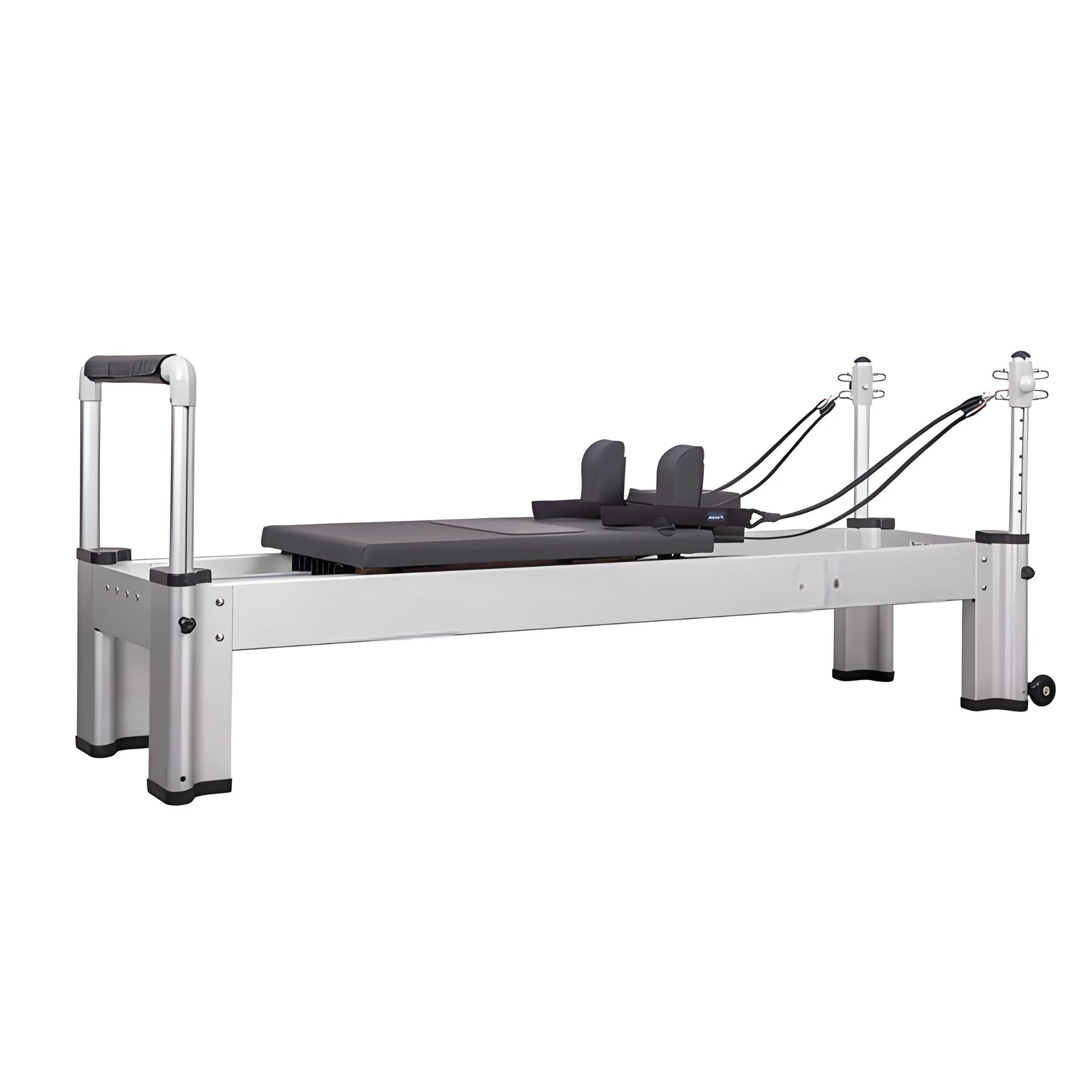
Comprehensive design and adjustable features of a white pilates reformer.
Conclusion
The Full Slide Track Small White Pilates Reformer in aluminum alloy represents a strategic investment for any B2B entity in the fitness, wellness, or rehabilitation sector. Its superior engineering, meticulous manufacturing, aesthetic versatility, and robust support infrastructure ensure long-term value, exceptional user experience, and a strong competitive advantage. By prioritizing quality, technical specifications, and comprehensive after-sales service, businesses can confidently choose this equipment to elevate their offerings and meet the evolving demands of their clientele.
Authoritative References
- International Organization for Standardization (ISO). ISO 20957-1:2013 Stationary training equipment – Part 1: General safety requirements and test methods.
- European Committee for Standardization (CEN). EN 957-1:2009 Stationary training equipment – Part 1: General safety requirements and test methods.
- Pilates Method Alliance (PMA). "Pilates Standards and Guidelines." Retrieved from pilatesmethodalliance.org.
- American Society for Testing and Materials (ASTM International). Various standards for aluminum alloys (e.g., ASTM B209, ASTM B221).
- Sports & Fitness Industry Association (SFIA). "State of the Industry Report." (Annual publication on fitness trends and equipment market.)
Latest news
-
Professional Pilates Cadillac Reformer for Sale and Buyer GuideNewsApr.16,2026
-
Professional Guide to Finding the Best Pilates Cadillac for SaleNewsApr.09,2026
-
Find the Perfect Cadillac Reformer Combo for Sale and Elevate Your Pilates PracticeNewsApr.07,2026
-
Choosing the Ideal Wooden Pilates Reformer Machine for Your Fitness JourneyNewsApr.04,2026
-
Choosing the Right Wooden Pilates Equipment for Studio and Home UseNewsMar.31,2026
-
Understanding the Versatility and Benefits of the Wood Reformer for PilatesNewsMar.28,2026
- Address
- Room 1601, 1302, Building A, Zijingguandi, Qiaodong District, Xingtai City, Hebei Province, China
- Sandra@raetin.com
- Phone
- +86 18231139331